


PTFE INSIGHTS | Part 3 of 3
Explore the Series: Part 1 | Part 2 | Part 3
By Rodrigo Costa
Director of Engineering, Evantic
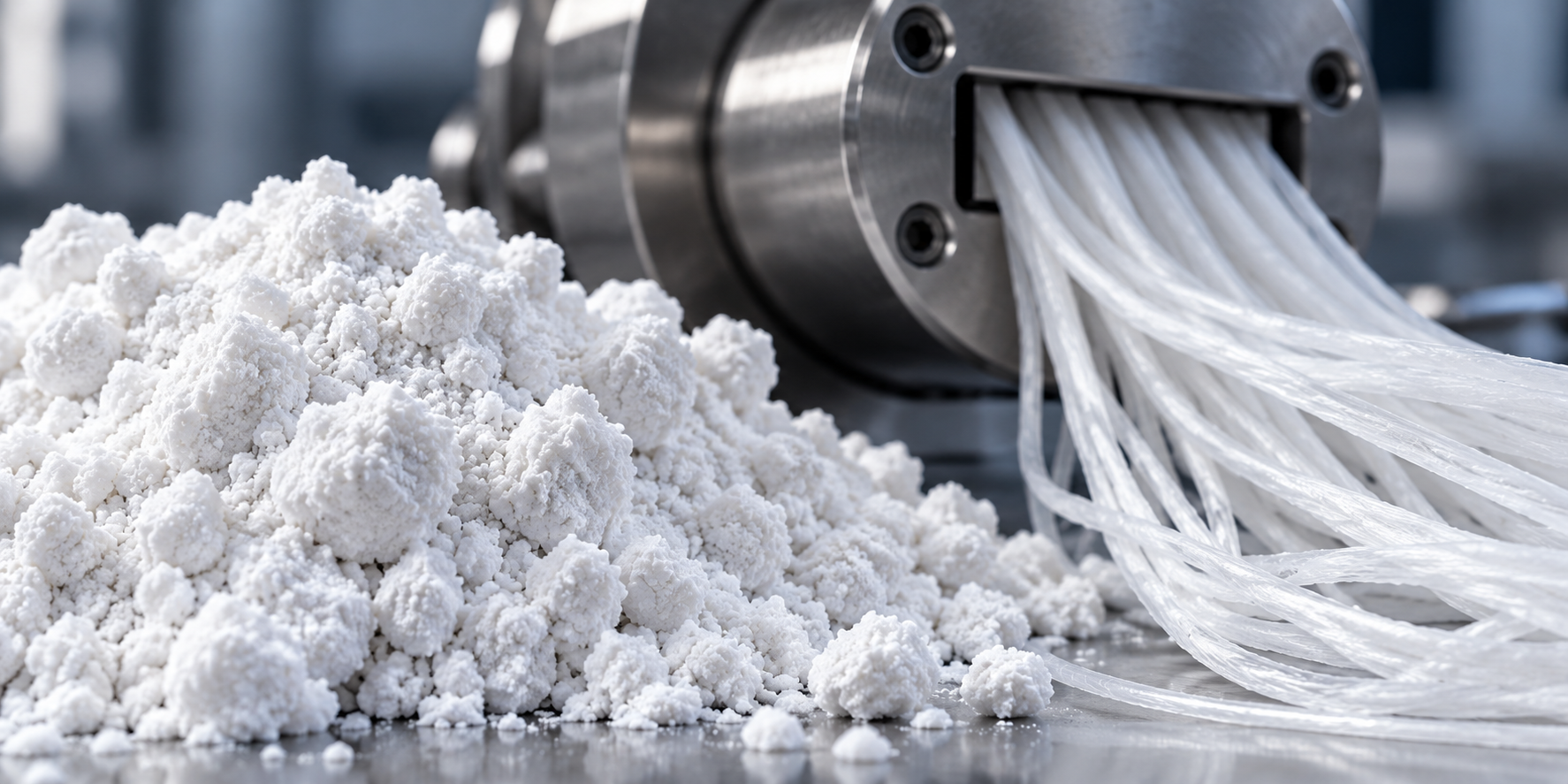
In this third article about PTFE in its various forms, we will discuss PTFE resins commercially known as fine powders. Previous articles discussed the basics of polytetrafluoroethylene (PTFE) and the resins commercially known as granular powders.
Fine powder PTFE resins are produced in a range of very high molecular weights (106 – 3×10⁷). This powder is processed by forming a paste by the addition of a petroleum-based hydrocarbon lubricant. This paste is then extruded into tubing, wire insulation, tape, or film. Typically, the extruded shape is dried in an oven to remove the lubricant. In the final step, the dried extrudate is sintered in an oven. The process of paste extrusion and sintering is usually continuous.
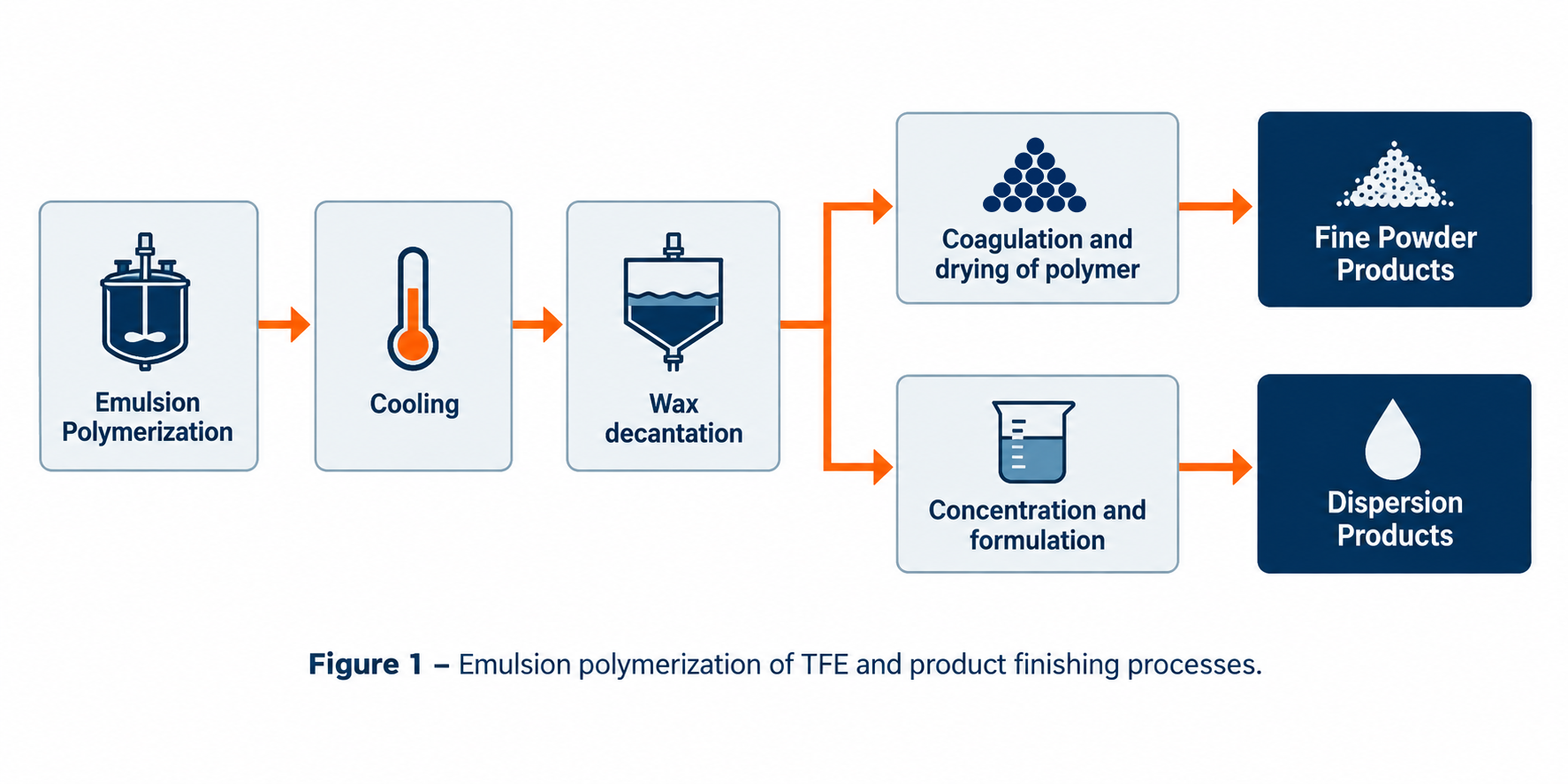
As discussed in the first article of this series, PTFE is the polymer made by the polymerization of the tetrafluoroethylene (TFE) monomer. Emulsion or dispersion polymerization is the method by which fine powder PTFE resins are manufactured. Fine powder resins are also called coagulated dispersion resins, which is descriptive of their production method. In general, the key characteristics of the emulsion polymerization regime include ample surfactant and mild agitation at elevated temperature and pressure. The dispersion recovered from the reactor is finished by two different processes depending on whether a dispersion or a dry powder (fine powder) is the desired final product, as illustrated in Figure 1.
The emulsion polymerization process has evolved significantly since the discovery of PTFE. Many manufacturers use small amounts of modifiers in order to improve certain properties and allow very thin-walled products to be produced by the paste extrusion process. Before this development, fairly high-molecular-weight fine powder PTFE was available but could not be used to create thin parts such as wire coating, tubing, and thin films. Excessive paste extrusion pressure and flaws developed when very high-molecular-weight resins were converted to parts less than 500µm in thickness. The addition of modifiers – or comonomers during the polymerization process – initially aimed to improve thermal stability of the dispersion, but researchers soon discovered that the addition of certain modifiers allowed them to control the molecular weight of the polymerized particles. The advantage of these polymers is the possibility of paste extrusion of their fine powders at high reduction ratios without the complication of high extrusion pressure and flaws in the extruded parts, such as tubing or wire insulation. Introduction of the comonomer improved the paste extrudability of the resin or the properties of the final product. Copolymers tend to improve the transparency of the sintered part such as tubing. Sometimes the modifier improves the extrudability but deteriorates the properties of the sintered part.
Production of Fine Powder Resins from the Dispersion
To produce fine powder from the polymerization dispersion, three processing steps have to take place: 1. coagulation of the colloidal particles; 2. separation of the agglomerates from the aqueous phase; and 3. drying the agglomerates. The coagulation of the particles consists of a dilution step with the addition of coagulating agents such as a water-soluble organic compound, an inorganic salt, or an acid. The diluted dispersion is then agitated vigorously. The separation of agglomerates from the aqueous phase is done by skimming or filtration. Drying of the PTFE agglomerates is carried out by vacuum, high frequency, or heated air so that the wet powder is not excessively fluidized.
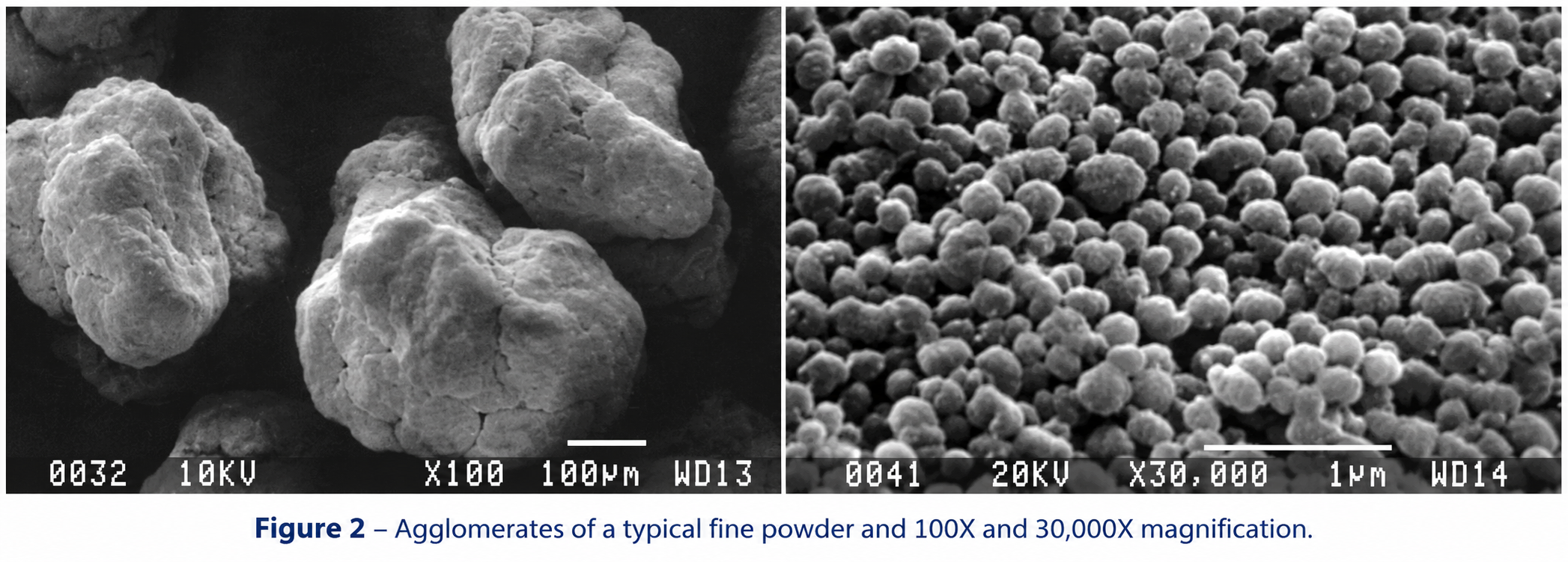
Individual particles of PTFE – usually referred to as primary particles – are in the 0.2 – 0.5 microns range. These particles form agglomerates (in the coagulation step) that are roundish and average several hundred microns in size. Figure 2 shows agglomerates of a typical PTFE fine powder. Closer examination at higher magnifications reveals that the agglomerates are composed of many small particles.
Processing of Fine Powder PTFE Resins
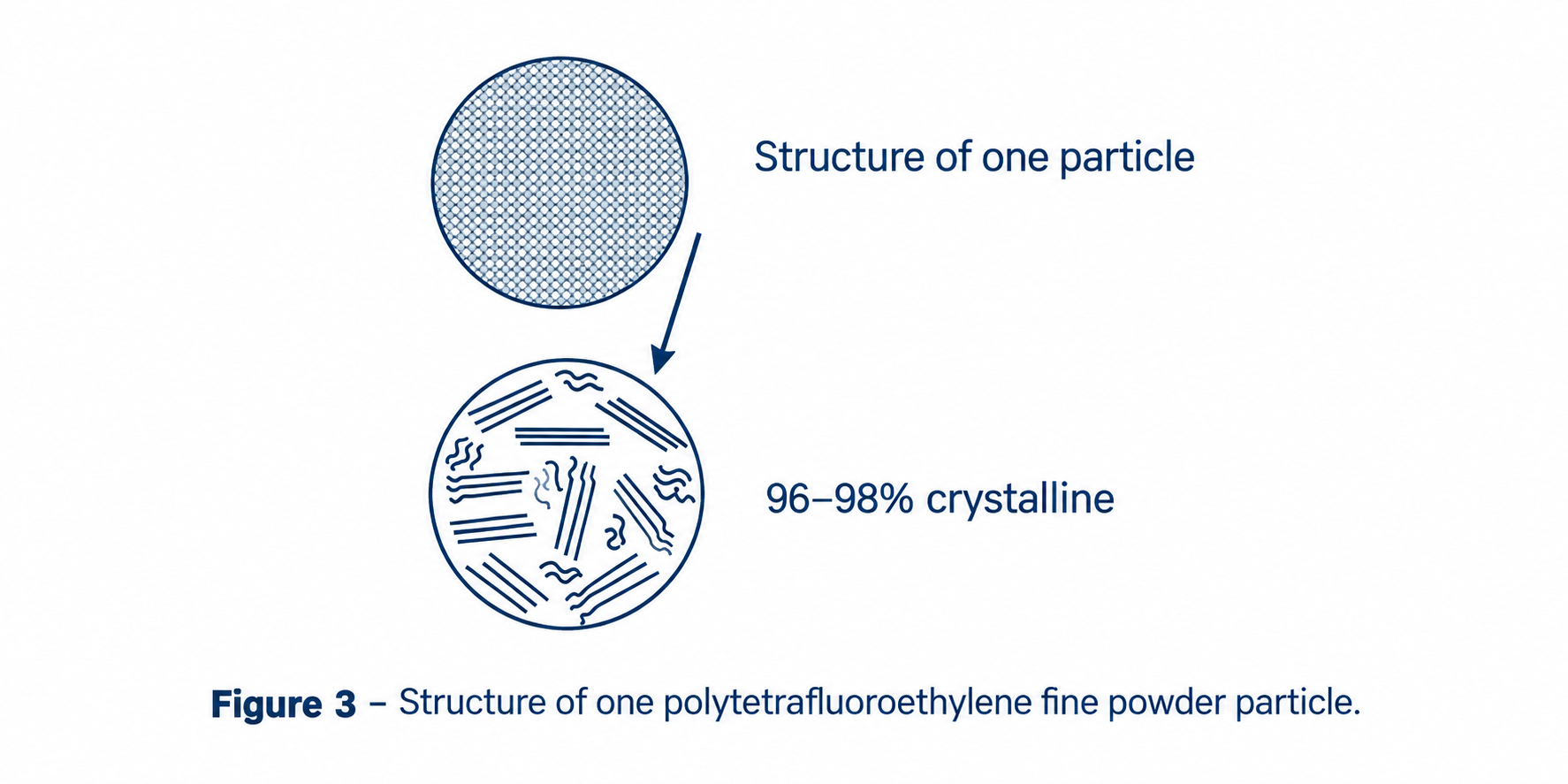
Fine powder PTFE is unique; it is highly crystalline (96% – 98%) and has a high molecular weight. The crystalline form of PTFE changes from a triclinic to a hexagonal lattice at 19°C (66.2°F). Above this temperature, fine powder PTFE becomes softer and more deformable, which is important to its processing.
Because it does not melt or flow, fine powder PTFE is fabricated by a technology adopted from ceramic processing called paste extrusion, where PTFE powder is first blended with a hydrocarbon lubricant (hence the term paste) which acts as an extrusion aid. It is then formed into a cylindrical preform at a fairly low pressure and placed inside the barrel of a ram extruder, where it is forced through a die at a constant ram rate.
Fine powder PTFE is susceptible to shear damage, particularly above its transition point (19°C). Handling and transportation of the containers could easily subject the powder to enough shear to spoil it if the resin temperature is above the transition point. A phenomenon called fibrillation occurs when particles rub against a surface or against other particles. Fibrils are pulled out of the surface of PTFE particles. Uncontrolled fibrillation must be prevented to ensure high-quality production from the powder. Premature fibrillation leads to the formation of lumps, which cannot be completely broken up. To ensure that the resin does not fibrillate, it should be cooled below its transition temperature.
Paste Extrusion and the Fibrillation Mechanism
In a single particle of PTFE, almost all the polymer chains are packed in a crystalline lattice (Figure 3). The orderly packing of completely linear polymer chains takes place during polymerization, monomer by monomer or brick by brick. This is precisely the reason that nearly perfect crystallinity is achieved despite very high molecular weights.
One of the characteristics of PTFE crystals is that they are loosely packed because of the relatively low van der Waals attraction forces between the chains in contrast to other polymers such as polyethylene. Chains can thus be removed from the surface of particles by the application of a fairly small force above the transition temperature. The chains abstracted from the particle are called fibrils. The ease with which chains can be pulled out at higher temperatures is the main reason that fine powder PTFE is handled, stored, and transported below its transition point.
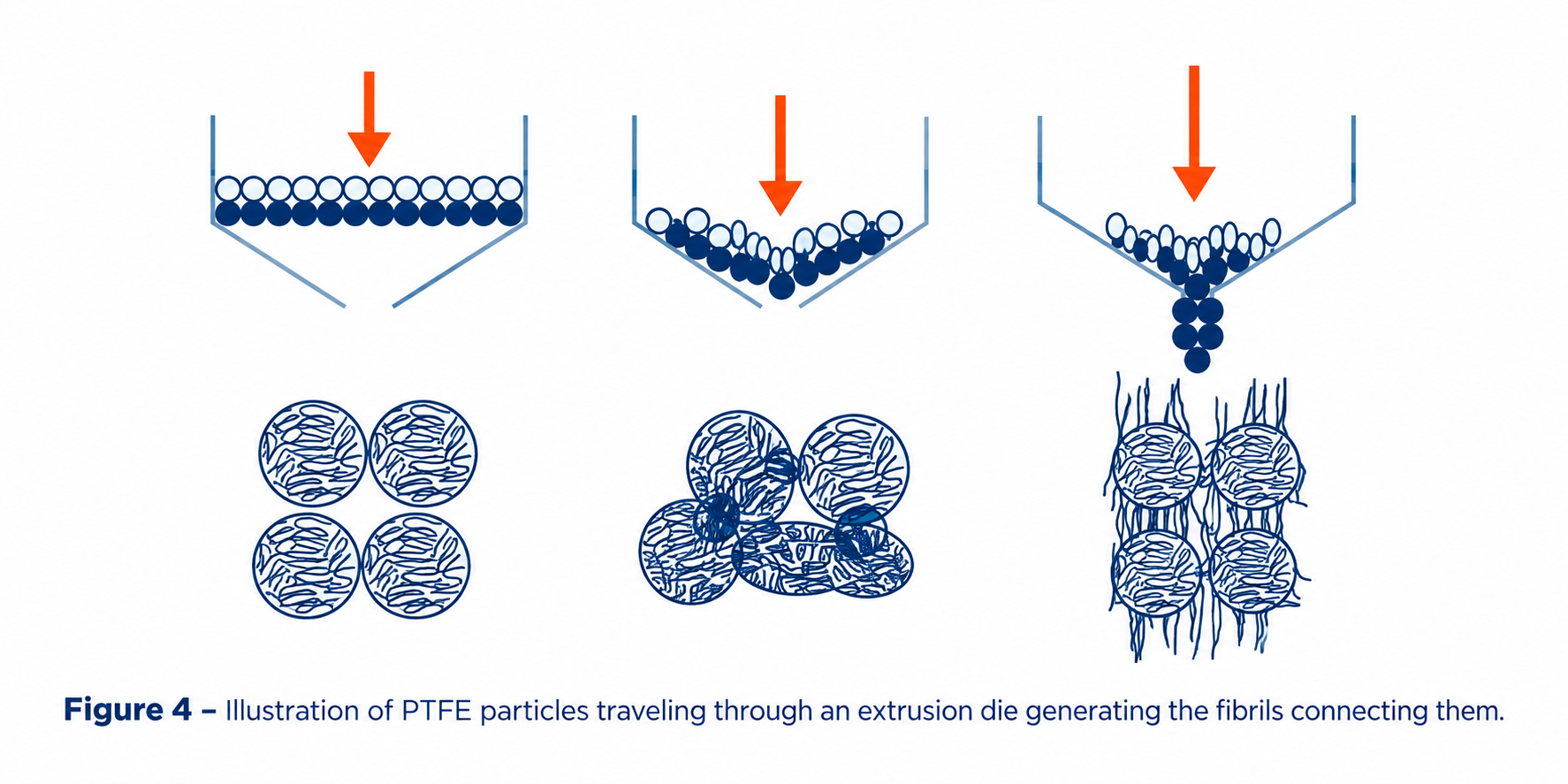
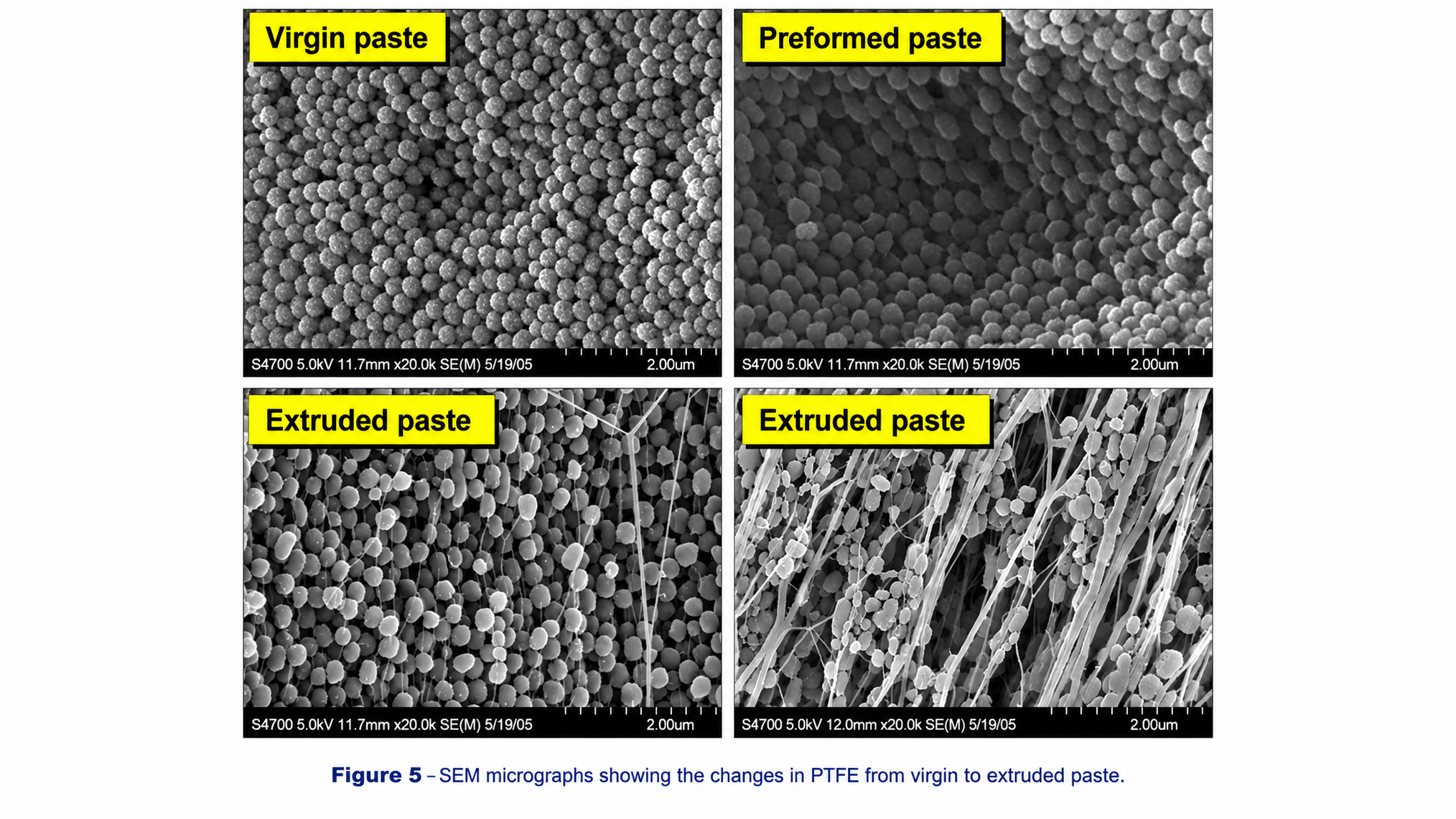
During the extrusion process, preformed resin particles going through the die are highly compressed due to the reduction in the cross-sectional area. Figure 4 shows a schematic of particles being pushed through a conical die. The neighboring particles then begin to mechanically interlock, as they rub against one another while competing for an exit out of the die. This results in the interconnection of adjacent particles. At the exit of the die, these connected particles are accelerated, causing the particles to separate, but because they had been interconnected, chains are pulled out from the particle – the fibrils. Now, particles are connected through the fibrils. The quality and number of fibrils generated during extrusion are responsible for the strength of the extrudate. The die design has a great impact on the quality of the extruded material. Figure 5 shows SEM micrographs of PTFE particles once mixed with the lubricant, preformed and extruded.
PTFE pastes can be extruded as tubes, solid rods, or beads, as coatings over conductors/wires, or as sheets/films. In all cases, once extruded, the material must go through one or more steps until it becomes the desired finished product. Regardless of the extrudate shape, a common post-extrusion step is the drying of the lubricant that was used as an extrusion aid. These lubricants are usually highly flammable hydrocarbons that must be evaporated from the PTFE before the sintering process can be performed.
Post-Extrusion Steps
Besides drying, common post-extrusion steps include:
- Calendering: usually employed to reduce/control thickness when the desired finished product is thin films or tapes
- Expansion or Stretching: employed to reduce density, improve/control porosity and mechanical properties
- Sintering: most extruded tubes are sintered in order to achieve the desired physical and mechanical properties
- Slitting: usually performed after drying and can be done with unexpanded or expanded PTFE; wide films (or webs) are usually slit to narrow widths commonly used for wire insulation and/or yarns used in sealing and medical applications
Common Applications for Parts Made of Fine Powder PTFE Resin
Tubing: The majority of tubes made from PTFE by paste extrusion have fairly thin walls (<8 mm) and are produced in a wide range of sizes, from a fraction of a millimeter to several centimeters in diameter. Applications range from fluid transfer in healthcare to fuel and hydraulic transfer in jet engines. Tubing is divided into three categories based on the size and wall thickness, for various applications: spaghetti tubing, pressure hose, and pipe liner.
Wire Coating: One of the important applications of fine powder polytetrafluoroethylene is wire insulation, used primarily for automotive, aerospace, and industrial applications where a high-temperature rating (>250°C / 482°F) and resistance to chemicals are required. Coaxial cable is another application where PTFE is used as the dielectric material between the two concentric conductors.
Unsintered Tapes and Films: Unsintered tapes and films are the most versatile form of product that can be produced using fine powder PTFE resins. Narrow widths of unsintered tapes and films are largely used in the wire and cable industry as primary insulation or as an external jacket of wire bundles. One advantage of using tape-wrapped insulation instead of extrusion over wire is that many tape wrap machines enable the application of several layers of PTFE or other insulating materials simultaneously, creating insulation systems capable of withstanding high operating temperatures (up to 260°C / 500°F), chemical attack, arcing events, and abrasion while providing lightweight insulation required, especially in aerospace applications. Due to its low dielectric constant, expanded PTFE (ePTFE) tapes (also known as low density tapes) and films are widely used in coaxial and/or data cables to improve signal transmission. PTFE tapes are also used to make convoluted pressure hoses for chemical transfer and to make yarns for industrial sealing and medical applications.
Evantic has over 30 years of experience in the development and manufacturing of unsintered PTFE films and tapes. Whether you are looking for a standard PTFE film or need assistance developing a solution that meets specific and strict requirements, our team of specialists can assist with material selection and defining the properties needed to supply parts that are right for your application. Our knowledge of raw materials and additives, combined with our process capabilities, enable us to create a solution that meets your specific requirements.
Visit our website www.Evantic.com for more information or contact us at sales@evantic.com.
REFERENCES
[1] Ebnesajjad, Sina. Fluoroplastics – Volume 1: Non-Melt Processible Fluoroplastics, the Definitive User’s Guide and Databook. 2nd ed., Elsevier, 2015.
[2] Ariawan, Alfonsius. 2001. “Paste Extrusion of Polytetrafluoroethylene (PTFE) Fine Powder Resins.” doi: https://dx.doi.org/10.14288/1.0058968